I have spent the last seven years of my life with my nose three inches away from seams, my thumb pressing into leather grains, and my ears tuned to the sound of a zipper pull hitting a gusset. In my line of work, we don't just look at how a bag "looks" in a curated Instagram square; we look at how it behaves when it is stuffed with a MacBook, a charger, a notebook, and the weight of a high-stakes Tuesday.
When I walk into a meeting—or more accurately, when I am scanning the floor of the Copenhagen Fashion Summit—the first thing I look at isn't the silhouette or the colorway. I look at the hardware. I look at the zipper brand, and I check the stitching for tension inconsistencies. If I see a branded zipper pull that screams its own name at me, I’ve already moved on. There is a specific kind of professional restraint required at the C-suite level, and the briefcase you carry is the silent prologue to your entire presentation.
This brings us to the most contentious debate in A4 document briefcase executive accessories: the shoulder strap. Is it a necessary utility, or a structural liability that ruins the architectural integrity of a fine leather piece? Let's break it down.
The Anatomy of Quality: Why Your Current Briefcase is Likely Failing
Before we discuss straps, we must discuss construction. I have a strict rule in my consulting practice: if the bag doesn't hold its own shape when empty, it isn't worth your time. If it slumps, it will inevitably crease your legal pads, destroy the crease in your trousers when it rubs against your leg, and look like a discarded sack by the time you reach your gate.
Market data is unforgiving in this space. I consistently tell clients that briefs priced under £200 often fail within 18 months. The failure usually starts at the stress points—the attachment rings for the strap or the zipper teeth. These bags are often marketed with terms like "genuine leather," which is, quite frankly, a marketing euphemism for the lowest grade of leather byproduct, often reconstituted and glued together. Genuine leather is the fast fashion of the hide world; it doesn't age; it simply disintegrates.
When shopping for a serious briefcase, look for these indicators of quality:
Feature What to Look For Leather Full-grain or top-grain, preferably vegetable-tanned for longevity. Hardware Solid brass or high-grade steel. If it’s branded, it’s usually a cost-cutting measure disguised as luxury. Zippers YKK or Riri are the gold standards. If you see a generic, flimsy pull, walk away. Structure The "A4 test": If you place a stiff A4 sheet inside, does it stay flat? If the bag folds or curves, the leather is too soft for structural business use.The Case Against the Shoulder Strap: Professional Restraint
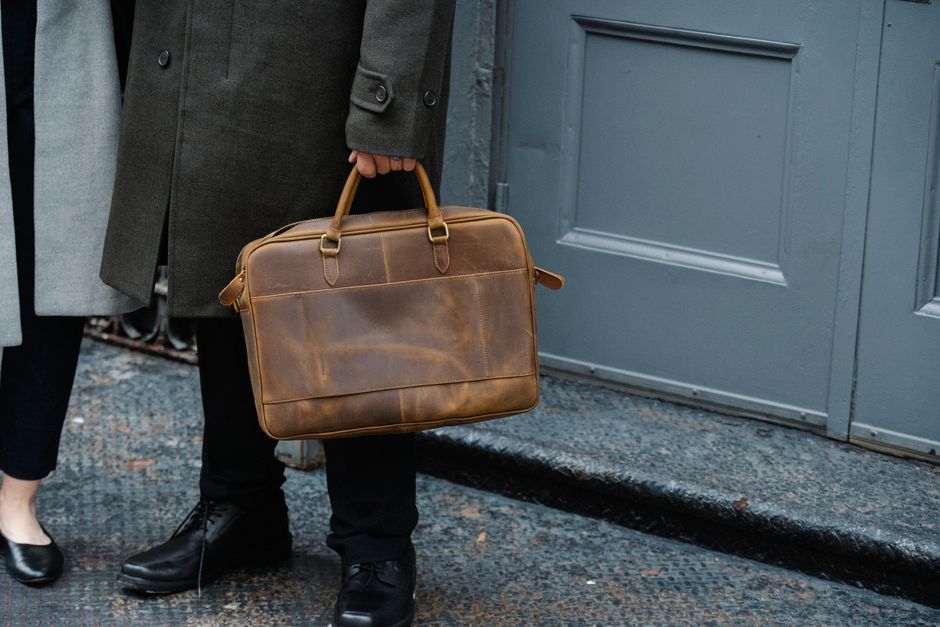
From a purely aesthetic standpoint, a briefcase is designed to be carried by the hand. The top handle creates a vertical line that keeps your silhouette clean. When you add a shoulder strap, you introduce a diagonal line that bisects your blazer. It ruins the drape of a bespoke suit and, more importantly, it makes you look like you are commuting to an internship rather than presiding over a board meeting.
There is a concept in fashion known as "Quiet Luxury," and it is the antithesis of the shoulder-slung look. True luxury is about the absence of unnecessary features. A bag with a permanent shoulder strap attachment is constantly showing off its "active" nature, which feels frantic. A CEO carries their bag as if they have nowhere to run and everything under control.
The Case For the Strap: Terminal Walks and Reality
Now, let’s talk about the real world. I track my airport segments—I do about 45 to 50 a year. If you think you can navigate a terminal with a heavy, top-handle-only briefcase during a connection sprint, you are kidding yourself. This is where carry comfort becomes a non-negotiable reality.
The solution is not to carry a bag that looks like a tactical tactical backpack. The solution is a high-quality removable shoulder strap. The key is in the attachment points. If the D-rings for the strap are exposed on the exterior of the bag, they look like unsightly ears when the strap is removed. A well-designed briefcase, such as those produced by heritage-focused makers like Von Baer, hides the attachment points or designs them so seamlessly that they disappear into the piping of the bag when not in use.

When should you actually use the strap?
The Terminal Walk: If your gate is 20 minutes away, use the strap. Your suit will survive the 15 minutes of contact; your shoulder will thank you for the even weight distribution. The "Three-Bag" Scenario: If you are carrying a briefcase, a garment bag, and a coffee, you have no choice but to throw the strap over your shoulder. Inclement Weather: If you are using an umbrella, the shoulder strap is the only way to keep your hand free to navigate revolving doors and transit turnstiles.The Hardware Truth: Why You Should Care About the Zipper
I have a visceral reaction to branded zipper pulls. When a company stamps their logo on the slider, they are essentially asking you to be a billboard for them. A true high-end briefcase should be about the user, not the brand. This is why I always gravitate toward YKK hardware. They are the quiet professionals of the manufacturing world. They don't need to brand the pull because the smoothness of the glide says everything that needs to be said.
When you are checking a bag, test the zipper. Does it snag? Is the pull tab heavy and substantial, or does it feel like aluminum foil? A briefcase that uses sub-par zippers is a briefcase that will abandon you at the worst possible moment—usually when you are trying to retrieve a contract in front of a potential client.
Final Verdict: To Strap or Not to Strap?
If you are a CEO or a high-level executive, the briefcase is your most important accessory. It is the box that holds your livelihood. My recommendation is as follows:
- Never commit to a fixed-strap bag. It is a stylistic trap. Invest in a model with a removable, high-quality leather strap. The ability to remove the strap is the mark of a bag that respects your need for versatility. Demand hide quality. Avoid "genuine leather" labels like the plague. If the manufacturer isn't specific about the tanning process, assume it’s subpar. Prioritize structure. If the bag doesn't stand up on its own when empty, it’s already failing.
The shoulder strap is a tool, not a fashion statement. Keep it tucked away in the bag's main compartment until you are navigating those long terminal walks, and then, deploy it with purpose. When you arrive at the meeting, detach it, stow it, and step into the room holding the handle. That is what we call professional restraint.
At the end of the day, a briefcase is a long-term investment. Don't look for the logo; look for the stitch density. Don't look for the trend; look for the hardware. And for heaven’s sake, make sure it’s sturdy enough to pass the A4 paper test. If your bag can't hold a piece of paper, it certainly can't hold your reputation.